The Complete Wedding Dress Alterations Cost Guide
Understanding bridal tailoring prices, bustle construction styles, fabric complexity multipliers, and fitting schedules.
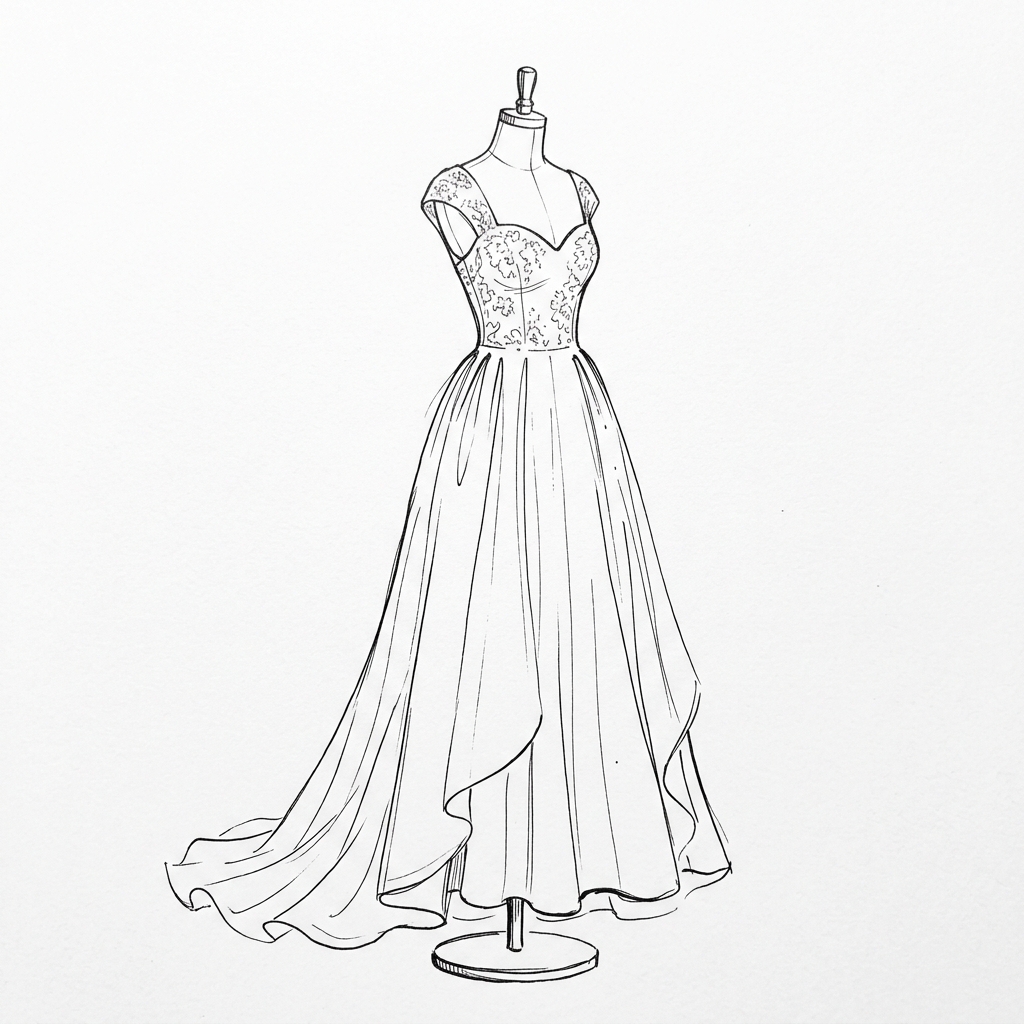
Proper alterations ensure your gown grazes 1 inch above the floor so you can walk and dance effortlessly.
1. Step-by-Step Walkthrough: How to Use This Tool
Navigating bridal alterations can feel intimidating when seamstresses quote complex terminology like "horsehair braid" and "French pickup points." Here is how to use this tool to build an accurate estimate before your first salon appointment:
Step 1: Inspect Your Skirt Construction & Underlayers
Look at the bottom hem of your gown. If it is a clean fabric edge (crepe, mikado, or satin), select Plain Clean Hem ($140). If the edge features a stiff nylon ribbon that keeps the skirt flared, select Horsehair Braid ($210). If it has intricate lace patterns along the perimeter, select Scalloped Lace Border ($320). Next, lift the outer skirt and count how many layers of crinoline, tulle, or lining are underneath—enter this number into Extra Skirt Underlayers so each layer is accurately accounted for.
Step 2: Check Your Bodice Fit & Undergarment Needs
Try on your dress with your intended bridal undergarments. If the waist or bust is loose or tight, check Take In / Let Out Bodice ($120). If you want built-in bust support so you don't need a strapless bra, check Sew-In Molded Bra Cups ($40). If the straps slip off your shoulders, check Shorten Straps / Sleeves ($50).
Step 3: Choose Your Train Bustle Style
If your gown has a train, you will need a bustle to secure the fabric off the floor during your reception dance. A 1-Point American Bustle ($75) works great for short sweep trains. For heavier cathedral trains or mermaid gowns, select a 3 to 5-Point French Bustle ($135) for balanced weight distribution.
Step 4: Export Your Seamstress Fitting Sheet
Click "📝 Export Word (.doc)" or "🖨️ Export PDF / Print" at the top of the dashboard. Bring this printed proposal directly to your first fitting. You can compare the seamstress's line items against your generated estimate to ensure you are receiving fair, transparent market rates.
2. 2026 Wedding Dress Alterations Price List
Almost every wedding dress requires alterations to achieve a custom haute-couture fit. Here is the realistic pricing breakdown:
| Alteration Service | Average Price Range | Labor Complexity & Notes |
|---|---|---|
| Plain Skirt Hemming | $120 - $180 | Standard single-layer satin, crepe, or simple chiffon hem. |
| Lace Applique / Horsehair Hem | $250 - $450 | Scalloped lace must be unpicked by hand, hemmed, and sewn back. |
| Taking In / Letting Out Bodice | $90 - $160 | Adjusting side seams, boning channels, and zipper closure. |
| Train Bustle (3 to 5 Points) | $100 - $175 | Color-coded loops, ribbons, and clear buttons to lift the train. |
| Sew-In Molded Bra Cups | $35 - $55 | Eliminates the need for a backless or strapless bra. |
| Convert to Corset Lace-Up Back | $150 - $250 | Replaces broken zippers and provides up to 1-2 sizes of flexibility. |
3. The 3 Primary Bustle Styles Explained
American (Over-Bustle)
The train is lifted up and secured onto buttons placed on the outside of the waistline. Best for A-line and ballgown dresses with lightweight trains.
French (Under-Bustle)
The train folds underneath itself using hidden color-coded ribbons sewn beneath the skirt, creating an elegant pick-up bubble hem. Ideal for mermaid and trumpet gowns.
Ballroom Bustle
Multiple interior hooks fold the entire train inward until the dress appears floor-length all the way around with zero visible bustle points.
4. The 3-Fitting Alterations Timeline
- First Fitting (8 - 10 Weeks Out): The seamstress pins the side seams, selects bra cups, pins the hem with your wedding heels, and discusses bustle styles.
- Second Fitting (4 - 5 Weeks Out): You try on the sewn dress. The tailor fine-tunes minor adjustments, tests the bustle, and checks that straps sit comfortably.
- Final Pick-Up (10 - 14 Days Out): Final try-on to ensure zero weight fluctuations affected fit. The salon professionally steams your gown and packs it in a breathable garment bag.
🔗 Integrated Bridal Attire Planning Tools
Frequently Asked Questions
Can a seamstress make a wedding dress bigger?
Standard wedding dresses have very limited seam allowances (usually 0.5 to 1 inch max). While taking a dress in by 1 to 2 sizes is routine, letting a dress out is difficult. If extra space is required, the best solution is converting a zipper back into a corset lace-up back, which instantly adds 1 to 2 inches of room.
Why do I have to bring my shoes to the first fitting?
The hemline of a wedding gown must graze exactly 1 inch above the floor so you don't trip while walking down the aisle. A 2-inch heel vs. a 3.5-inch heel completely changes the hemline measurement. If you change your shoes after your hem is cut, you will either trip or your shoes will show in photos.
How do I export this estimate to bring to my seamstress?
Click the "📝 Export Word (.doc)" or "🖨️ Export PDF / Print" button at the top of the page. The tool generates an itemized alteration checklist with all your selected tailoring points ready to bring to your consultation.